Hiring yacht crew in Australia is a people decision with a paperwork tail. The usual routes are an agency, which typically charges roughly 8% to 10% of a year’s salary for a permanent placement; a job board and your own screening; or a management company that does it for you. Pay runs from about $150 to $500 a day for freelance crew, to $10,000 to $14,000 a month for a captain on a 100 to 120 ft yacht, including super. This guide sets out who you actually need, what they cost, what an agency does for its fee, and the checks to make before anyone steps aboard.
Key facts
- Agency fee, permanent — 8% to 10% of annual salary, or 75% to 100% of a month’s pay, depending on the agency
- Agency fee, temporary — 25% to 30% of daily pay; seasonal (30 to 180 days) 70% to 80% of a month
- Guarantee — 60 days is the shortest in one industry guide; many match the 90-day probation
- Freelance day rates — captain $350–$500, engineer $300–$500, deckhand or mate $150–$500, steward/ess $150–$500
- Captain, 100–120 ft — $10,000 to $14,000 a month including super (Crew Pacific, March 2022)
- Employer on-costs — 12% super and WorkCover on top of salary; four weeks’ paid leave is the industry norm
Who you actually need
The first question is not who, but how many. On a boat of 40 to 60 ft used on weekends, the answer is often nobody full time: an owner at the helm and a day deckhand or a maintenance crew for the washing, checking and turnarounds. Our guide on full-time crew walks through the four ways to run a yacht and what each costs. If you have decided that someone will be aboard, here are the roles.
| Role | What they do | When you need one |
|---|---|---|
| Captain | Runs the boat, the crew, the budget and the compliance | Most yachts above about 65 to 75 ft that are used regularly |
| Engineer | Engines, generators, systems, the engine room log | Larger yachts and any yacht on a long-range programme; below that, a captain with technical skills and a trades network |
| Mate / first officer | Second in command, deck, tender, watchkeeping on passages | Yachts that cruise, and any passage with a night leg |
| Deckhand / bosun | Washing, polishing, lines, tender, deck maintenance | The day-to-day upkeep: the “other forty hours a week” |
| Steward / stewardess, chief stew | Interior, guests, provisioning, laundry, service | Yachts that host, charter or have owners aboard for long stays |
| Chef | Galley, menus and provisioning | Yachts with a lot of guests and extended cruises |
A crew of two, captain and deckhand or captain and stewardess, is how many private yachts around 60 to 80 ft are run. Add a third person at the point where somebody is always on duty or the boat is used for guests.
What crew are paid
There is no single Australian pay survey for yacht crew, so any number needs a date and a source. These are the published ones.
Full-time, large yachts. The Crew Pacific salary guidelines (March 2022, Australian dollars per month, superannuation to be included on top) start at the 100 to 120 ft band:
| Role | 100–120 ft | 120–140 ft |
|---|---|---|
| Captain | $10,000–$14,000 | $14,000–$16,000 |
| Chief engineer (MED 1–3) | $8,000–$9,000 | $9,000–$10,000 |
| First mate / first officer | $6,000–$7,000 | $7,000–$8,000 |
| Second mate (OOW) | $5,000–$6,000 | $6,000–$7,000 |
| Bosun | $3,500–$4,000 | $5,000–$6,000 |
| Deckhand with experience | $3,000–$3,500 | $3,500–$3,800 |
| Chef | $5,500–$6,500 | $6,500–$8,000 |
| Chief steward/ess | $4,500–$5,000 | $6,000–$7,000 |
| Steward/ess with experience | $3,200–$3,500 | $3,500–$4,000 |
Freelance and delivery work (per day, Crew Pacific). Captain $350–$500; engineer $300–$500; deckhand or mate $150–$500; chef $200–$500; steward/ess $150–$500, “pending experience”. The guide also says it is standard for the yacht to provide return fares to the vessel, food, uniforms and transport, that health insurance is usually provided after a 30 to 90-day evaluation period, that four weeks’ paid holiday is normal, and that private yachts generally pay a higher base because there are no charter tips.
Smaller boats, live examples. Published pay for a 40 to 80 ft private yacht is scarce. A Gold Coast listing (Queensland) for a temporary deckhand on a 30 m-plus private motor yacht was $400 a day. A year-round Gold Coast (Queensland) interior manager role for a yacht-share company, advertised on 12 May 2023, was $68,000 plus super, about 40 hours a week and four weeks’ paid leave. The listing has expired; treat it as a dated example, not a current rate.
The 2022 table is four years old. Check it against what your own market is telling you; pay varies by port and by season.
The real cost of a full-time hire
Take a captain on a $100,000 base. Add 12% superannuation and about 1.3% WorkCover, and the employer cost is about $113,000 before leave, flights, training and the relief cover for four weeks’ holiday. Put an agency on top at 8% to 10% for the first year and the first-year cost is $8,000 to $10,000 more, once. That is the arithmetic; the agency’s real quote will depend on its own terms.
Replacement costs more than recruitment. Industry turnover runs at 20% to 40% a year, and the price of a poor hire is a season of stalled maintenance. That is why the fee is worth less than the process around it, as the next two sections explain.
What a crewing agency does for its fee
A good agency is not a job board. For the fee it should:
- Know the candidate. Check qualifications and references before it sends a CV, and place only people it would put on its own boat.
- Understand the boat. The owner’s habits, the family, the existing crew, the itinerary and whether the yacht charters. A captain who suits a quiet private yacht may be wrong for a charter programme.
- Check the paperwork. Certificates, medicals, the right to work, and a written employment agreement before a start date.
- Stand behind the placement. A replacement guarantee, a follow-up call a few weeks in, and someone to ring when it is not working.
The fee models published by one industry guide are worth knowing. Permanent placement is 8% to 10% of annual salary, or 75% to 100% of a monthly salary. Seasonal crew (30 to 180 days) are 70% to 80% of a gross month, and temporary placements of 1 to 29 days are 25% to 30% of gross daily pay. Some agencies discount repeat clients, 10% off a second placement and 20% off a third, and some offer a monthly retainer that covers all crew. The shortest guarantee in that guide was 60 days, with many agencies matching the 90-day probation.
A worked example. Captain on $100,000: permanent fee of 8% to 10% is $8,000 to $10,000; at 75% to 100% of one month ($8,333) it is $6,250 to $8,333. A ten-day relief deckhand at $400 a day earns $4,000, and a 25% temporary fee is $1,000. The yacht normally pays; under the Maritime Labour Convention practice, a crew member is not charged to be placed.
Before you sign
Ask for the fee schedule, the guarantee period and what happens if the candidate leaves in week ten, in writing. “We will look after you” is not a guarantee.
Doing it yourself
You can hire without an agency. Then the work is yours: screen CVs, interview, call at least two previous captains or owners, prepare the employment agreement, run payroll and superannuation, arrange leave and insurance, and arrange a trial period. The trap is the first month. A new captain who arrives to find no maintenance schedule, no vendor list and no history will spend three weeks learning the boat from scratch, and an unhappy first month is how a placement fails.
If you manage the boat through a management company, the manager usually handles the hiring, the handover and the paperwork, and the boat’s record stays put when crew change.
The paperwork
Qualifications. Rules depend on how the yacht is used. A yacht used only for recreation is not a domestic commercial vessel, even though paid crew run her, and AMSA says paying someone to crew her does not change that. If she is chartered or hired out, she is a domestic commercial vessel and her master needs the right certificate of competency; for most yachts under 24 m that is a Master less than 24 metres certificate under Marine Order 505, which replaced the old Mate under 80 m certificate in January 2023. Even on a private yacht, a captain with the certificate has had their sea time tested.
Medical fitness. AMSA requires a certificate of medical fitness for seafarers who apply for a certificate of competency; the rules sit in Marine Order 76. Ask to see the certificate.
Training. Ask for current first aid, sea survival and firefighting training, and for the engineer, the engine tickets that match the engines. Don’t assume; read the certificate and note the expiry date.
Employment basics. Superannuation at 12%, WorkCover, a written agreement, rest time, paid leave and a probation period. Industry guidance is at least 10 hours’ rest in any 24 and four weeks’ paid leave a year. Get advice on which agreement or award applies to your boat; we could not find a published answer for private-yacht crew.
Visas. Foreign crew need permission to work in Australia. The Maritime Crew visa is aimed at commercial ships and the Home Affairs form says crew of yachts do not normally qualify, so ask a registered migration agent before you make an offer.
Labour hire. Queensland requires a labour hire licence (other states have their own rules, so check where the yacht is based) for anyone who supplies workers to work for another business, and it is an offence to use a provider that does not hold one. A recruiter introducing someone you employ is a different thing; a firm sending you its own staff by the day is labour hire. Ask for the licence number and check the register.
References and the first month
References first, on the phone. Call the last two captains or owners, and ask three things: would you employ them again, how did they handle a bad day, and why did they leave. A written reference tells you nothing a phone call will not.
The first month is the probation. Agree it in writing, set a handover list (open defects, logs, contacts, safety gear, passwords) and walk the boat together. A good handover is a week of overlap with the last captain; if that is not possible, have a handover record that stays with the boat. See full-time crew for what leaves when a captain does.
Marine HQ crew placement
Marine HQ places crew on motor yachts across Australia: captains, engineers, mates, deckhands, stewards and stewardesses, for permanent roles, seasons, deliveries and short relief cover. We are a yacht management company first, so we place people who will be working on boats like yours, and we know what a good handover looks like.
- You tell us the boat and the job. Size, programme, home port, how often she is used, whether she charters and who is already aboard.
- We find and check the people. Certificates, medical, sea time and references, before a CV reaches you.
- We shortlist and introduce. You meet the people we would put on the boat ourselves.
- We help with the start. A written agreement, a handover list and a check-in once they are aboard.
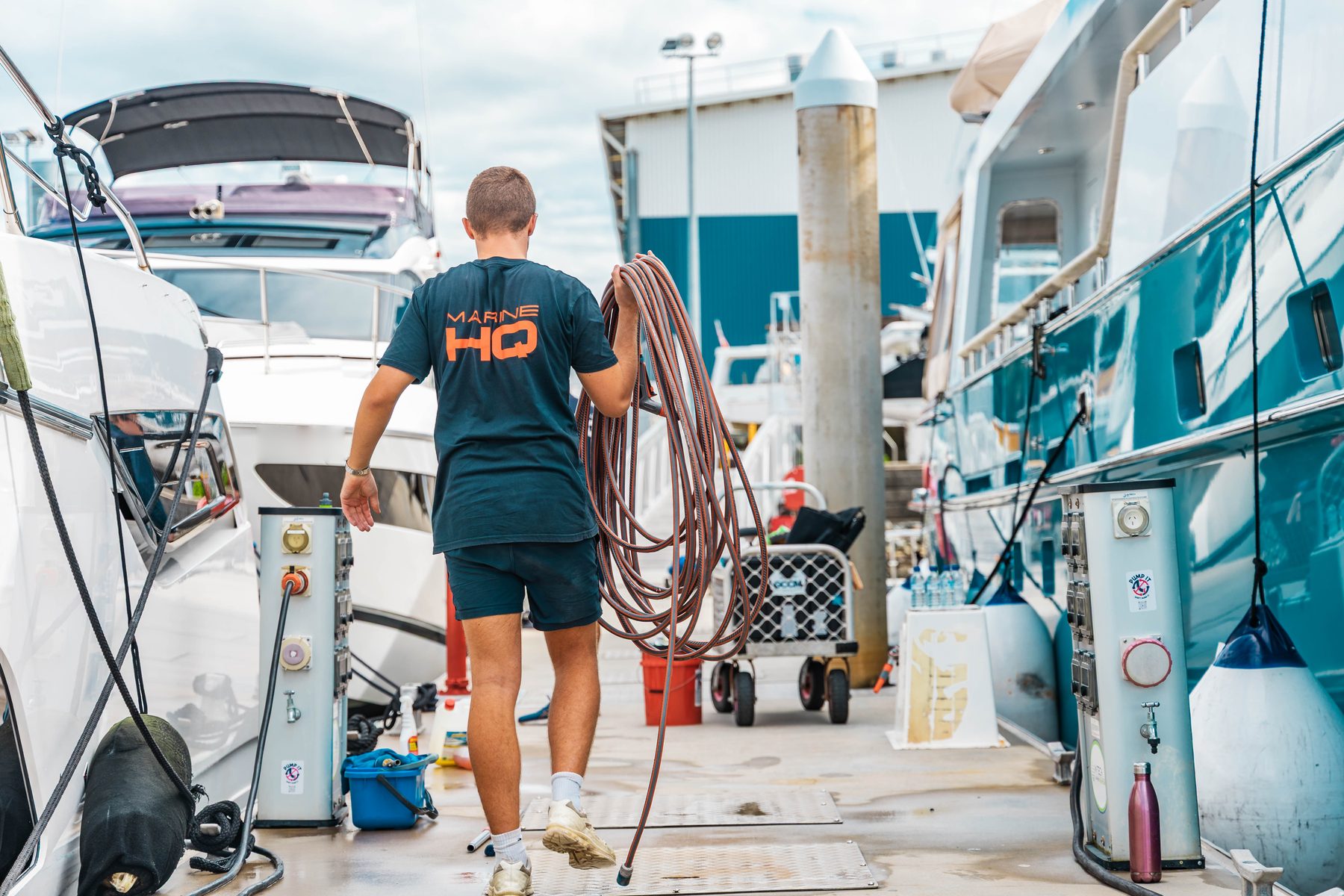
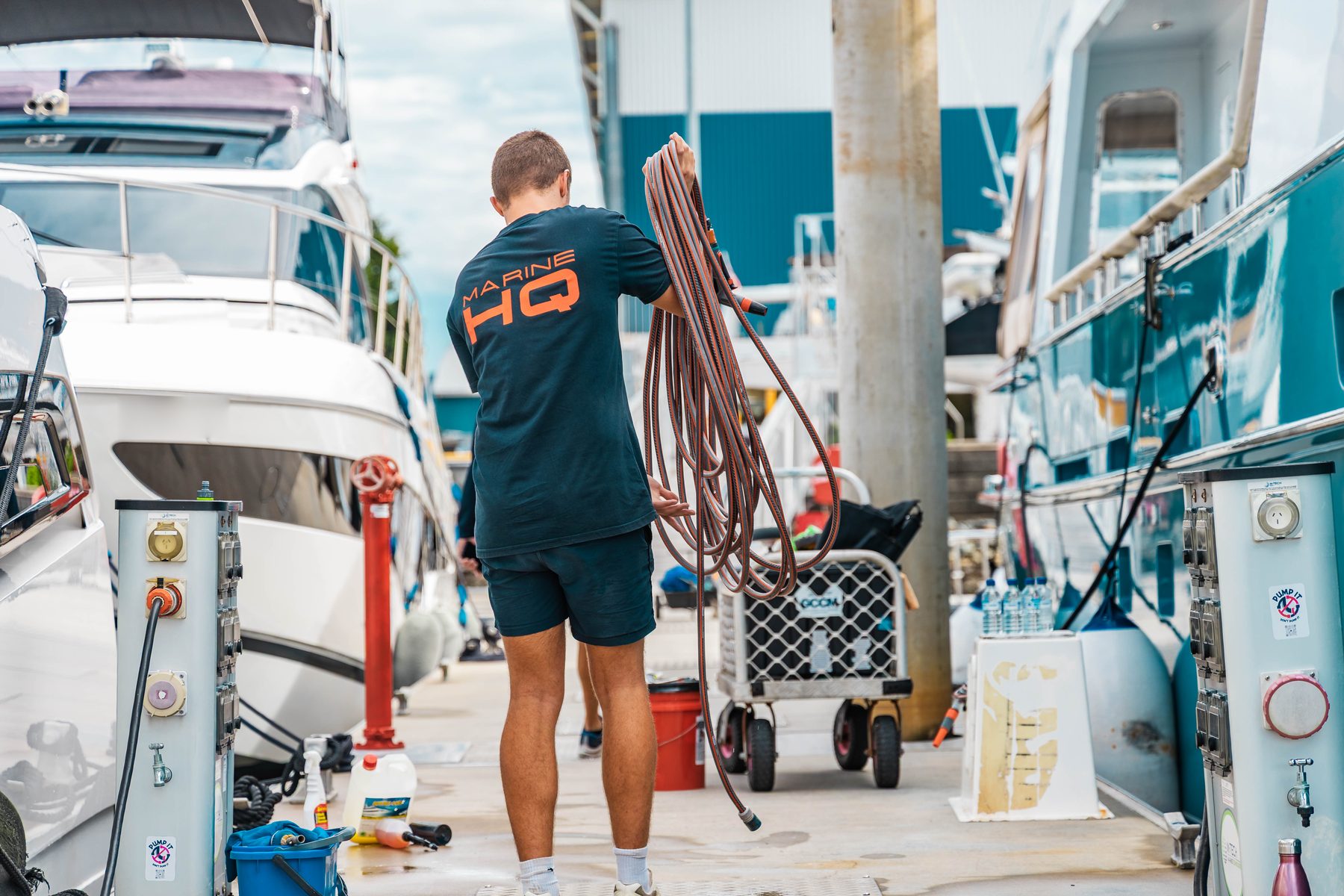
For work on the water in between, our team covers relief and delivery skipping, wash-downs, day work and maintenance, from our bases at The Boat Works and Gold Coast City Marina & Shipyard in Coomera, Queensland. Call 0439 748 387 or email yachtsupport@marinehq.com.au with the role, the boat and the dates and we will tell you how we can help and what it will cost.
If you are looking for yacht work
If you are a captain, engineer, deckhand or stewardess looking for work anywhere in Australia, see how to get into the yachting industry and send us your CV, your certificates, your sea time and the dates you are available. We cannot promise a job, but we will talk to you. The best things you can have ready are current certificates and medical, two references from previous yachts, and a clear idea of the kind of boat and programme you want.