The usual way into yachting in Australia is short and cheap compared with most careers: a medical, the STCW basic safety course (about eight days), an entry-level deckhand or stewardess course if you want one, and a CV that shows you can turn up on time and work hard. Then you do daywork, get known, and a recruiter or a captain puts you on your first boat. Entry pay is modest, and the career runs from there to captain or chief engineer if you build the sea time. This guide sets out the steps, what they cost in time, what a first job pays and how to get in front of Marine HQ.
Key facts
- The baseline — STCW basic safety training (about 8 days) and a certificate of medical fitness
- Entry roles — deckhand, steward/ess, junior engineer, crew chef
- Entry pay — junior deckhand or steward/ess $3,000–$3,500 a month plus super on a 100–120 ft yacht (Crew Pacific, March 2022)
- Daywork — $150–$500 a day freelance, depending on experience; $400 a day for a temporary deckhand on a Gold Coast 30 m-plus
- Bases — Gold Coast, Sydney and the Whitsundays are the main ones for larger motor yachts
- Contact — 0439 748 387 or yachtsupport@marinehq.com.au
What the work is
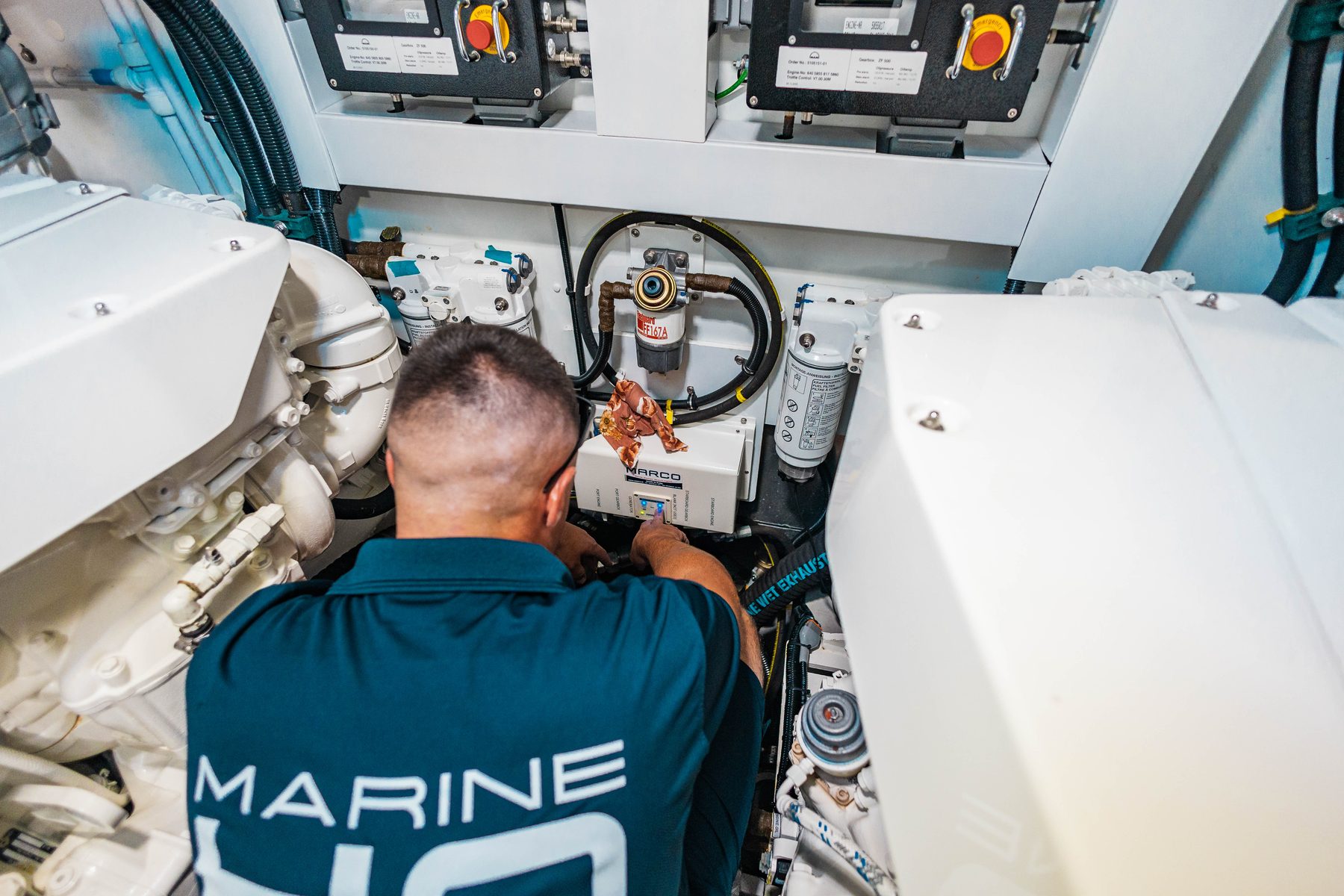
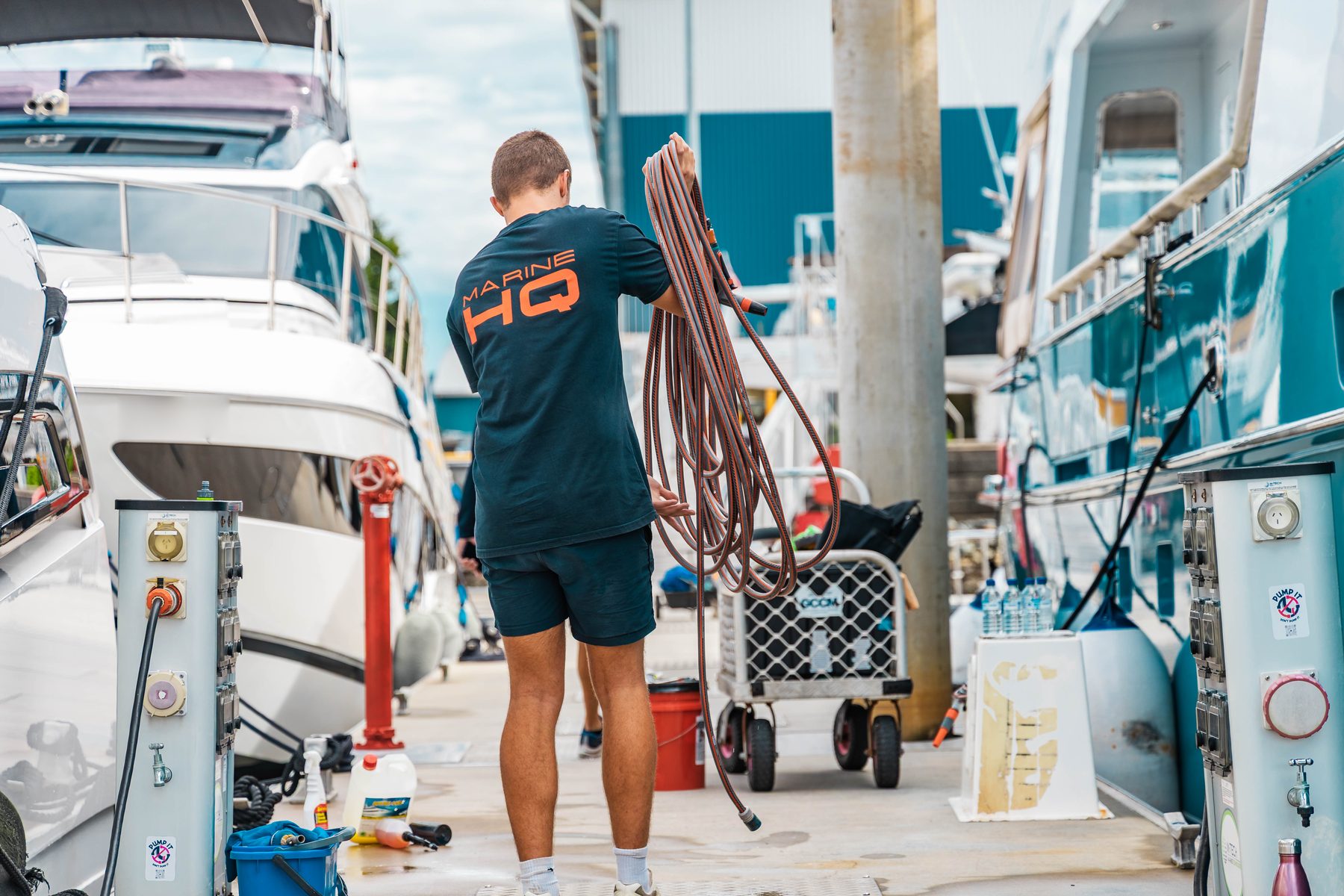
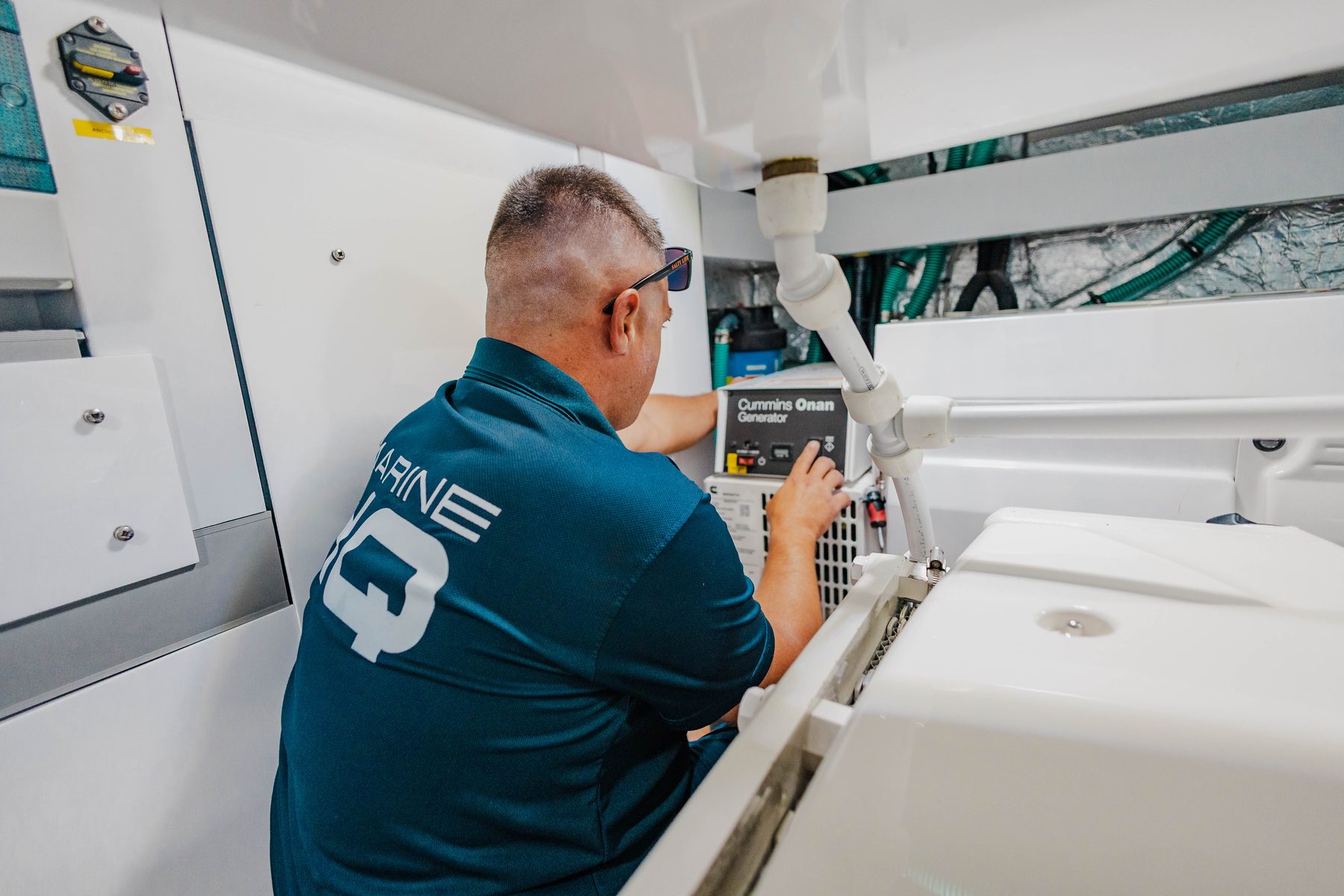
Yacht crew are not on holiday, and the best first-timers work that out in the first week. A deckhand washes, polishes, handles lines, drives the tender, and does the maintenance that keeps the boat looking new. A steward or stewardess runs the interior: housekeeping, laundry, service, provisioning. Engineers look after engines, generators and systems. Chefs cook for the owner, guests and crew. Days are long, the weekend is often a working day, and you live in close quarters. In return the food, the uniform and the travel to the vessel are normally provided, and the pay is good for a first job.
The first steps
- Book a medical. A certificate of medical fitness is part of the standard kit. AMSA’s medical rules for seafarers are in Marine Order 76. Do this first; a problem found after paying for courses is expensive.
- Do the STCW basic safety course. Superyacht Australia’s guide for newcomers calls STCW the mandatory baseline set by the International Maritime Organisation and says it takes about eight days with theory and practical work. Superyacht Crew Academy at Warriewood in Sydney runs the course, with intakes every three weeks, and Crew Pacific in Cairns runs it too. Ask any provider for the full price, including materials.
- Add a role course if you want one. Deckhand and stewardess courses are offered by the same providers. For deck, a powerboat licence and tender driving help; for interior, hospitality, silver service and mixology; for the galley, a cookery qualification.
- Write the CV. One page, a recent photo, your certificates and expiry dates, and anything useful: cooking, childcare, drone work, photography, trades. Denison Yachting’s guide for new crew puts it bluntly: you must have a great CV, and a portfolio helps (before-and-after deck work for deckhands, food and table settings for stews and chefs).
- Get in front of recruiters and captains. Australian recruiters place “green” crew in their first role. The Superyacht Australia guide names Hill Maritime and Coastal Yachting Recruitment on the Gold Coast, and boards like MYS Superyacht Crew list Australian jobs. You can also contact us.
Going further than entry level
If you plan to stay, the next step is a commercial ticket, and AMSA runs the national system.
- General Purpose Hand and Coxswain. Entry-level domestic commercial tickets, available through AMSA-approved training providers; Superyacht Crew Academy lists General Purpose Hand, Coxswain and Master less than 24 m among its AMSA courses. TAFE Queensland’s Coomera campus runs Coxswain Grade 1 as a four-week course ($4,645 full fee, $1,665 subsidised, as quoted in our guide on full-time crew).
- Master less than 24 metres. AMSA’s certificate for the master of a vessel under 24 m; since January 2023 it replaced the old Mate under 80 m certificate. Sea time and an assessment are required.
- Engineering. Crew Pacific’s pay guide lists chief and second engineers by Marine Engine Driver (MED) grade, so check AMSA’s engineering certificates and ask an approved training provider where to start.
- Overseas tickets. Some people arrive with UK or international yacht certificates. AMSA’s rules on recognising them are separate and change, so check with AMSA before you pay for anything.
What a first job pays
Published pay is thin, so here is what there is, with dates.
| Role | What was published |
|---|---|
| Junior deckhand, 100–120 ft | $3,000–$3,500 a month plus super (Crew Pacific, March 2022) |
| Junior steward/ess, 100–120 ft | $3,000–$3,500 a month plus super (Crew Pacific, March 2022) |
| Freelance deckhand, mate or steward/ess | $150–$500 a day depending on experience (Crew Pacific) |
| Temporary deckhand, 30 m-plus private yacht, Gold Coast | $400 a day (listing on MYS) |
Yachts commonly pay for food, uniforms and travel to the boat, and health insurance after a 30 to 90-day trial. Four weeks’ paid holiday and a five-and-a-half or six-day week are described as normal. Private yachts generally pay a higher base than charter yachts because there are no charter tips.
How people actually get their first boat
Daywork is how most people start. A captain or head of department tries you for a few days, and if you are good, somebody remembers. Denison’s guide says the same: temporary work can lead to a full-time role. Turn up early, do the unglamorous job properly, and ask what to do next. After that:
- Be reachable. Answer the phone and reply quickly; a captain with a gap will not wait long.
- Keep certificates current. Check expiry dates; STCW refresher courses are a cost, and expired certificates cost you the job.
- Stay in touch with agents. If you are still looking, tell them, so they remember you.
- Be where the boats are. The Gold Coast, Sydney and the Whitsundays are the main bases; most employers prefer candidates already in Australia.
How to contact Marine HQ
Marine HQ places crew on motor yachts across Australia and looks after yachts day to day from The Boat Works and Gold Coast City Marina & Shipyard in Coomera. We hear from yacht owners who need crew, and from people who want to work on a yacht, and we like to talk to both.
To get in front of us, send:
- your CV with a recent photo
- copies of your certificates and medical, with expiry dates
- the roles you want (deck, interior, engineering, galley) and any experience
- where you are based and the dates you are free
- two references, if you have them
Email yachtsupport@marinehq.com.au or call 0439 748 387. We cannot promise a job, but we will read what you send and tell you plainly where you stand. If you are an owner looking for crew instead, see how to hire yacht crew in Australia.